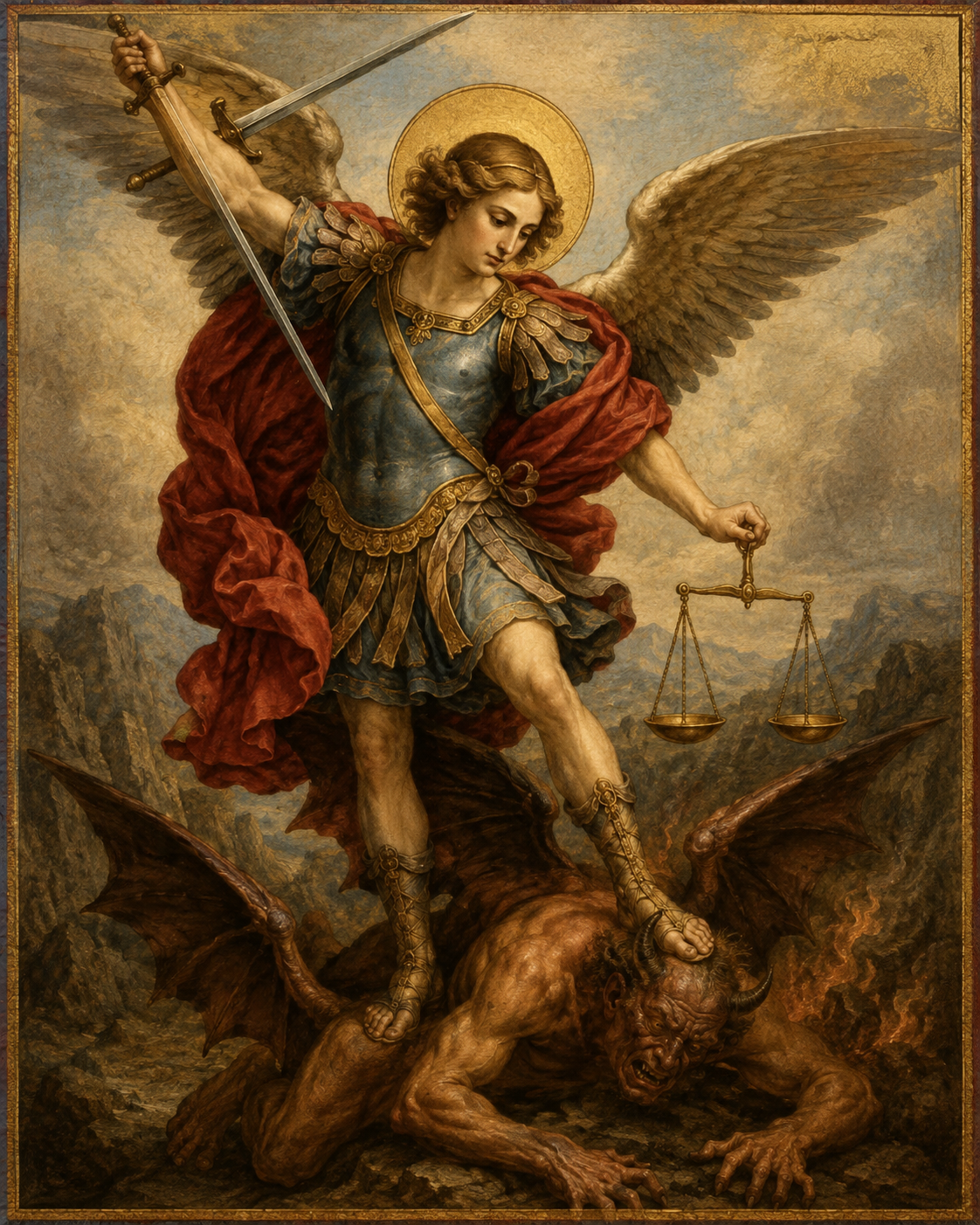
Archangel Michael Prayer for Healing: The Ancient Words That Millions Turn to When Nothing Else Works
admin a·9/1/2026·👁 24 views
There's a moment that comes to almost everyone — sitting in a hospital waiting room, lying awake at 3 a.m. with pain that won't let go, or watching someone you love grow weaker by the day. In that moment, medicine feels slow, logic feels useless, and something older and deeper stirs inside you. You want to reach for something bigger than yourself.
A Shorter Version for Urgent Moments
For centuries, that something has had a name: Archangel Michael.
Warrior. Protector. Healer of the impossible. Across Christian, Jewish, and Islamic tradition, Michael is the archangel called upon not just to fight darkness, but to stand guard over the sick, the frightened, and the dying. When people whisper his name in a hospital corridor or before a surgery, they aren't just reciting words. They're invoking one of the oldest healing traditions known to humankind.
Warrior. Protector. Healer of the impossible. Across Christian, Jewish, and Islamic tradition, Michael is the archangel called upon not just to fight darkness, but to stand guard over the sick, the frightened, and the dying. When people whisper his name in a hospital corridor or before a surgery, they aren't just reciting words. They're invoking one of the oldest healing traditions known to humankind.
This article will give you the full prayer, explain exactly how and when to use it, and show you why so many people swear it changed something in them — physically, emotionally, or spiritually — the moment they said it with their whole heart.
Who Is Archangel Michael, Really?
Who Is Archangel Michael, Really?
Before we get to the prayer itself, it helps to understand who you're actually calling on.
Michael's name means "Who is like God?" — a rhetorical battle cry against pride and evil. In the Book of Daniel, he's described as "one of the chief princes," a protector of God's people during times of distress. In Revelation, he leads the heavenly armies against the forces of darkness. In Catholic tradition, he's one of only three archangels named directly in scripture, alongside Gabriel and Raphael.
But Michael isn't just a warrior. Across centuries of devotion, he has quietly become known as a healer of the impossible — the angel people call on when doctors run out of answers, when fear has taken over the body, or when someone feels an illness is not just physical, but spiritual — as though something is attacking them from the inside.
This is why his healing prayer feels different from a general "get well soon" blessing. It carries an edge of protection. It doesn't just ask for wellness — it asks for a shield.
The Archangel Michael Prayer for Healing
Here is the prayer, in its most widely used form. Read it slowly. Don't rush.
Saint Michael the Archangel,
defend me in this hour of weakness.
Be my protection against sickness of body, mind, and spirit.
Drive far from me all that seeks to harm, weaken, or destroy.
Surround me with your mighty light,
and let your sword cut away all that does not serve my healing.
Restore strength to my body,
peace to my mind,
and hope to my heart.
By the power of God, who commands you,
thrust into the darkness all fear, all pain, all despair.
I place my healing in your hands, Michael,
trusting that where you stand guard, no harm can take root.
Amen.
Some people say this prayer once, slowly, with their eyes closed. Others repeat it three times — a number with deep symbolic weight in nearly every faith tradition tied to the Trinity, to completion, to divine emphasis.
There is no wrong way to say it. What matters is that you mean it.
Why This Particular Prayer Feels So Different
If you've ever prayed before — for anything — you may have noticed something about this one. It doesn't feel passive. It doesn't feel like quietly hoping something good happens to you.
It feels like calling in reinforcements.
That's intentional. Michael is traditionally depicted with a flaming sword and a shield, standing at the gates, actively fighting. When people pray to him for healing, they aren't just asking for comfort — they're asking for active defense. This subtle shift changes something psychologically. Instead of feeling like a passive victim of illness, you become someone standing behind a warrior, watching him fight on your behalf.
Ask anyone who has prayed this during a frightening diagnosis, and they'll tell you: it doesn't remove the fear instantly. But it gives the fear somewhere to go. Instead of spiraling alone in your head, you hand the fear to Michael, and ask him to stand between you and it.
When People Turn to This Prayer
You don't need to be facing a terminal illness to say this prayer. People turn to Archangel Michael for healing in moments like:
- Before surgery — to calm the nerves and ask for protection through anesthesia and recovery
- During chronic illness — when pain has become a daily companion and hope is wearing thin
- In moments of unexplained anxiety or dread — when something feels spiritually "off," not just physically
- For a loved one — praying on behalf of a child, parent, or friend who cannot pray for themselves
- During recovery from addiction — where the "battle" language of Michael resonates deeply with the daily fight for sobriety
- After a frightening diagnosis — in the raw, disoriented hours after hearing news you weren't ready for
- At bedtime, when fear creeps in — because healing isn't only physical; broken sleep and racing thoughts need protection too
How to Actually Pray It (Not Just Read It)
Here's where most people get it wrong. They read the words like a to-do list, expecting nothing to happen, and then wonder why it felt hollow.
Try this instead:
- Find stillness first. Even ten seconds of silence before you begin changes everything. Close your eyes. Take one slow breath in, and let it out longer than it came in. This single breath tells your nervous system: something important is about to happen.
- Say the name out loud, even quietly. "Saint Michael." Not just in your head — let your lips move. There's something about vocalizing a prayer, even in a whisper, that makes it feel less like a thought and more like an act.
- Picture the shield. As you say the words "surround me with your mighty light," actually picture it. Around your body. Around your bed. Around the hospital room. This isn't about believing in magic — it's about training your mind away from fear and toward protection, which has real, measurable effects on stress and healing outcomes.
- End with surrender, not control. The line "I place my healing in your hands" is the hardest part for most people to truly mean — because it asks you to let go of the illusion of control. But thatrelease is often where the emotional relief begins. You are not abandoning responsibility for your health; you are simply refusing to carry the entire weight alone.
- Return to it — don't treat it as a one-time fix. Say it in the morning. Say it before a scary appointment. Say it again at night. Healing, physical or emotional, is rarely a single moment — it's a process, and this prayer is meant to walk beside you through it, not solve it in one recitation.
Sometimes there isn't time for the full prayer — you're in an ambulance, in a waiting room, or holding someone's hand as they're wheeled into an operating room. For those moments, a shorter version works just as powerfully:
Michael, stand guard.
Protect this body, this mind, this spirit.
Drive back all harm. Bring healing now.
Amen.
Six seconds. That's all it takes. And in the moments when six seconds feels like all the time in the world, it's enough.
What People Say They Feel After Praying
This People describe a range of things — and it's worth being honest about all of them, not just the dramatic ones.
Some describe an immediate wave of calm, as if something physically settled in their chest. Others say nothing happens in the moment, but they notice, hours or days later, that their fear has quietly loosened its grip. Some say they slept peacefully for the first time in weeks. Others simply say it gave them the courage to walk into a hospital room they'd been avoiding.
What almost everyone agrees on is this: it changes the relationship with the fear itself. The illness may not disappear. The diagnosis may not change. But the feeling of facing it completely alone often does.
That, more than anything, may be the real healing this prayer offers — not a guarantee against suffering, but a guarantee against isolation in the middle of it.
A Note on Faith and Doubt
You don't have to be certain about angels to say this prayer. Many people who turn to it aren't traditionally religious — they're simply desperate, frightened, and searching for words bigger than their own. That's not a contradiction. That's exactly what prayer has always been for.If doubt creeps in as you say it, let it. You don't need perfect faith for the words to matter. Sometimes the act of reaching out — even uncertainly — is the most honest prayer of all.
Frequently Asked Questions
Can I pray this for someone else who is sick? Yes. Simply change "me" to their name — "defend John in this hour of weakness" — and picture the shield of light around them instead of yourself. Many people pray this version for a hospitalized loved one when they can't be physically present.
Do I need to be Catholic or religious for this prayer to help? No. While the prayer draws from Catholic tradition, it's recited today by people across many faiths and by people with no formal religious affiliation at all. What matters most, according to those who use it regularly, is sincerity rather than doctrine.
How often should I say it? There's no fixed rule. Some people say it once during a moment of acute fear; others build it into a daily routine during a long illness or recovery. Repetition doesn't diminish its meaning — many find it becomes more grounding with familiarity.
What if I don't feel anything after praying? That's normal, and it doesn't mean it "didn't work." Some people feel immediate calm; others notice the fear easing gradually over hours or days. The absence of an emotional wave in the moment doesn't cancel out the intention behind the words.
Is this prayer a replacement for medical treatment? No. This prayer is meant to sit alongside medical care, not instead of it — offering emotional and spiritual steadiness while doctors, medication, and treatment do their part. Most long-time practitioners are clear that prayer supports healing; it doesn't replace evidence-based care.
Final Thoughts
Whether you're praying for yourself or for someone you love, the Archangel Michael Prayer for Healing offers something rare in moments of illness: the feeling that you are not facing this alone. Not the illness. Not the fear. Not the sleepless nights or the waiting rooms or the uncertainty.
Say it slowly. Say it often. Say it especially on the days you don't feel like praying at all — because those are usually the days it matters most.
Saint Michael the Archangel, defend us in this hour of weakness.
Continue Your Journey of Faith